Mornings that only work one way
The socks have to be inside out. The toast can't touch the eggs. Any change to the sequence — intentional or not — can derail the entire day before it starts.

WHO WE HELP · AUTISM
Your child experiences the world uniquely. Kinspire builds a complete picture of your family and gives you strategies that actually work — in your home, in real life.

WHAT WE SEE
Not in a textbook. Not in a waiting room. In your house, on a Wednesday, when the routine broke and no one recovered.
The socks have to be inside out. The toast can't touch the eggs. Any change to the sequence — intentional or not — can derail the entire day before it starts.
Leaving the park, stopping a game, switching from screen to dinner — the shift in activity isn't just inconvenient. For your child, it can feel genuinely destabilizing.
A sound that doesn't bother anyone else. A tag in a shirt. A room that's too bright. The input that feels neutral to others can be genuinely painful or unbearable for your child.
Playdates, birthday parties, school lunch — environments that feel natural to other kids can require enormous effort from yours. They may come home depleted even when it "went well."
The dinosaurs. The trains. The specific show watched on repeat. Their focused interests aren't a problem — they're a window into how their mind works best.
You've become fluent in your child's cues, rituals, and rhythms. But it's a lot to carry — and you deserve support that understands what you're navigating every day.

“Autism isn't a limitation. It's a different path.”
THE SCIENCE
Autism Spectrum Disorder (ASD) is a neurodevelopmental difference — not a disease, not a deficit, not something to be fixed. It affects how a child processes sensory input, communicates, and connects with others. It's called a "spectrum" because no two autistic children look the same.
Some children are highly verbal; others communicate through gesture, visuals, or AAC. Some seek intense movement and stimulation; others need quiet and structure to feel regulated. All of these are valid expressions of an autistic nervous system.
A diagnosis isn't a label. It's a tool — a way to help parents, teachers, and therapists understand your child's needs and work together more effectively.

Rich language, few words, gestures, or AAC — all are valid. The goal is connection, not a specific form of it.
Autistic children may over- or under-respond to sensory input. Understanding their sensory profile is often the most transformative shift a family can make.
Repetitive behaviors and rituals aren't defiance — they're regulation strategies. They help autistic children feel safe and in control of their experience.
HOW WE HELP
Every autistic child is different. What helps one child may not help yours. We start by understanding exactly how autism shows up in your child — then we build from there.
01
We start with your child's clinical profile — how their autism presents, their sensory profile, their communication style, their strengths. Then we go deeper: your home routines, your daily rhythms, your family dynamics. Because support that doesn't understand how your family actually works won't work for your family.
02
Every strategy and deep dive we generate is specific to your child's profile — not generic autism tips. We help you understand what's driving the behavior, what your child needs in that moment, and how to respond in a way that builds trust and regulation over time.
03
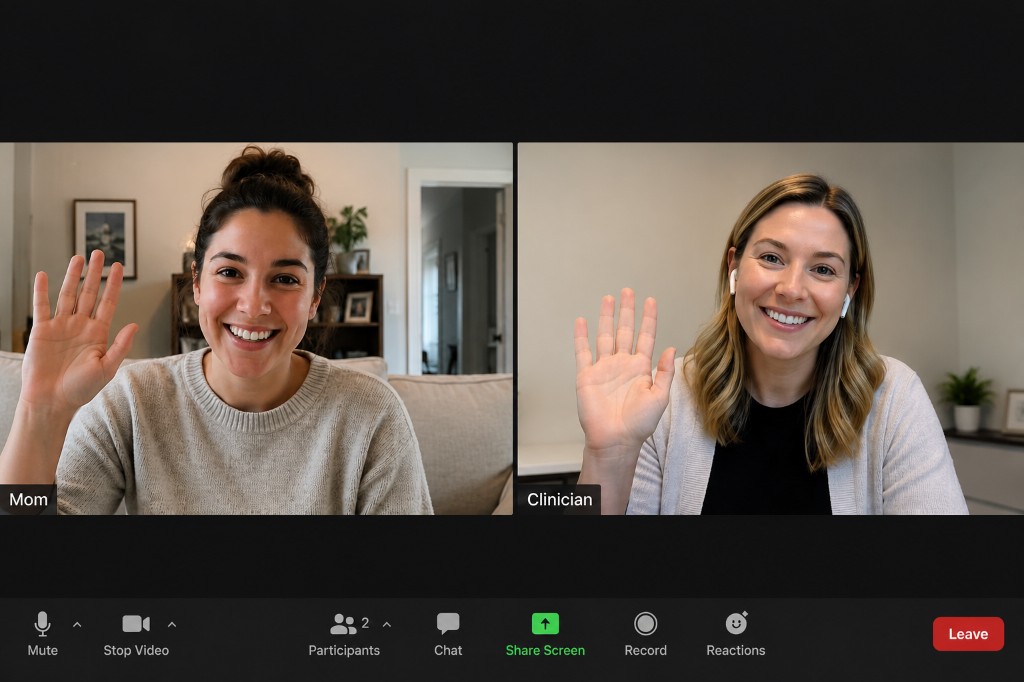
Licensed OTs and neuropsychologists lead sessions designed specifically for autism families. Walk the journey alongside other parents raising autistic children, hear what's working for them, and leave feeling less alone — and more equipped.
Led by licensed clinicians. Three types of sessions — support groups for community, educational workshops to learn and open forum office hours — so you always have somewhere to turn.
Support Group
A space to connect with other parents navigating the same challenges. Share what's hard, hear what's helping, and walk away feeling less alone. Facilitated by a Kinspire clinician.
Workshop
A deep dive into sensory processing — what it means, how to identify your child's specific profile, and how to structure your home environment to support regulation rather than trigger overload.
Ask Me Anything
Bring your most pressing question about your autistic child — meltdowns, school, communication, sensory needs, whatever is hardest right now. No appointment needed.

CLINICAL PERSPECTIVE
Lily and Dr. Jill have worked with hundreds of autism families. Here's what they want you to know.

PhD, ABPP-CN · Co-Founder & Neuropsychologist
“One of the most powerful things a parent can do is understand that their autistic child's behavior is communication. Every meltdown, every shutdown, every insistence on routine — it's all telling you something. My job is to help you become fluent in what your child is saying, so you can respond in a way that actually helps.”

MS, OTR/L · Co-Founder & Clinical Officer
“When I work with an autistic child, I'm not trying to change who they are — I'm trying to understand how their nervous system experiences the world. Once we have that picture, everything else follows: the environment, the routine, the sensory supports. The goal is always a child who feels safe, capable, and understood.”
FROM THE KINSPIRE BLOG
Written by our clinical team for parents in the thick of it — not researchers writing for other researchers.

Autism · Sensory
Every autistic child has a different sensory fingerprint. Here's how to identify your child's, and what to do with that knowledge at home.
Read more →
Autism · Regulation
Before your child can self-regulate, they need to co-regulate with you. Here's what that looks like — and why your calm is the most powerful tool you have.
Read more →
Autism · Progress
Progress with autism doesn't always look like milestones. Here's how to recognize it, celebrate it, and let it fuel you through the hard days.
Read more →COMMON QUESTIONS
Answered by clinicians who've worked with hundreds of autism families.
Parent training is one of the most effective supports for autistic children. Strategies learned in a clinical setting don't automatically transfer to real life — they need to be practiced in the environment where your child actually lives. When parents understand how their child's nervous system works and how to co-regulate, structure transitions, and build daily routines, they become the most powerful support their child has. Kinspire is built around this: giving you the understanding and tools to show up differently every day — not just knowing what to do, but knowing why it works for your child specifically.
Sensory processing differences are extremely common in autistic children. Their nervous systems may over- or under-respond to input — sound, light, touch, movement, taste, textures. This affects everything from morning routines to mealtimes to meltdowns. What looks like a behavioral problem is often a sensory one. Understanding your child's unique sensory profile is frequently the single biggest shift a family can make — and it's where Kinspire's OT team starts.
Yes. Autism is a spectrum, and many autistic children are highly verbal, social, and capable of masking their challenges in public — especially girls. The difficulties often show up at home: in transitions, emotional regulation, sensory sensitivity, or exhaustion after a day of social effort. If your child holds it together outside but falls apart at home, that pattern itself is important clinical information. Late and missed diagnoses are common in this profile.
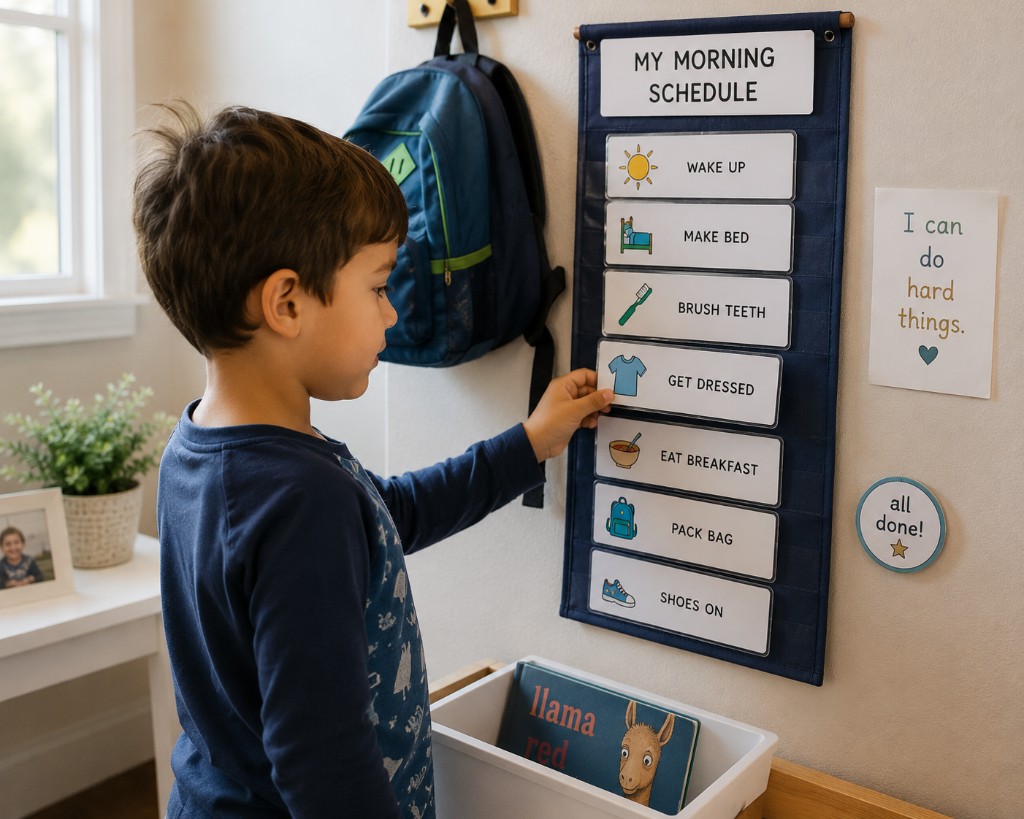
Transitions are hard for autistic children because they require a rapid shift in attention, routine, and sensory state — all at once. The strategies that work aren't about willpower. They're about preparation, predictability, and sensory support. Visual schedules, countdown warnings, transition objects, and consistent language all help. Kinspire builds a transition plan specific to how your child's nervous system works — not a generic checklist.
OTs are uniquely suited to support autistic children because they look at the whole sensory and motor system — not just behavior. An OT can identify your child's specific sensory profile, build regulation strategies, improve daily living skills, and create home routines that reduce stress for the whole family. Because Kinspire OT support happens in your child's real environment — not a clinic — we get to see their authentic self and support real-life moments: getting dressed, mealtime, school transitions, and more.
FOR YOUR FAMILY
Your child isn't broken.
They're growing in their own way.
Start free. No commitment. Built for your child from day one.