01
Data
Understand the "why" behind your child's behavior.
PRECISION PARENTING™
Grounded in occupational therapy and neuropsychology. Powered by AI that creates everything just for your family. So the framework never stays theoretical. It becomes specific, evolving guidance that belongs only to you.


WHY OUTSIDE-THE-BOX KIDS NEED THEIR OWN FRAMEWORK


That's not defiance. That's a nervous system that was never accounted for.
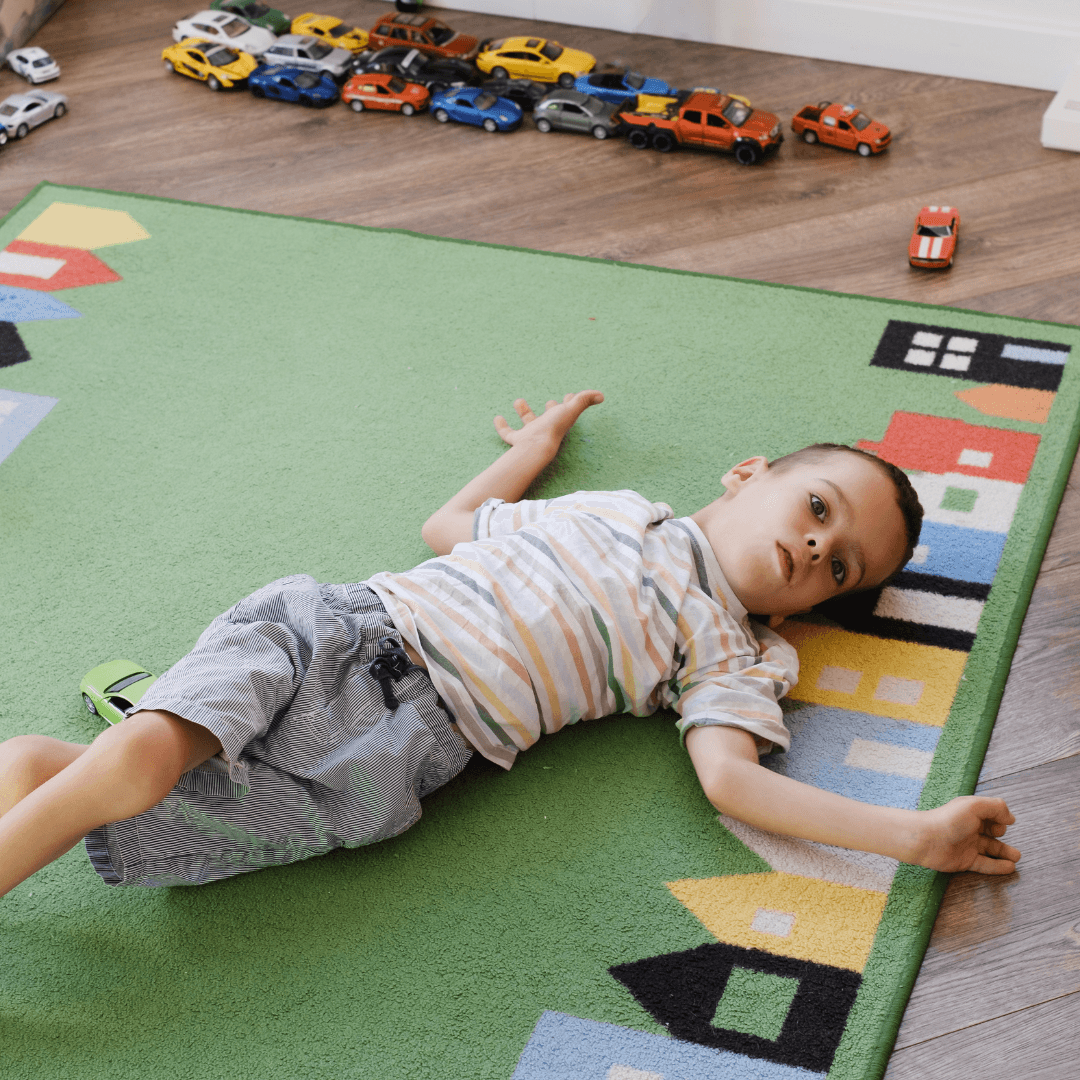
Outside-the-box kids aren't wired the way most parenting books assume. Their nervous systems feel more, process differently, and need more support navigating the ordinary demands of daily life. A transition that another child barely notices can send their system into overdrive. A correction that lands cleanly for a neurotypical kid can escalate into a full shutdown.
Every major parenting approach — gentle parenting, behaviorism, reward-based systems — was built around a neurotypical developmental baseline. None of them were built around the nervous system science that outside-the-box kids actually need.
Precision Parenting™ is the first framework built entirely for parents raising outside-the-box kids.
THE CORE BELIEF
Most parenting approaches start with the behavior — what the child did, what the parent should do in response. Precision Parenting™ starts one step earlier. It asks: What is this child's body and brain actually responding to right now? What sensory input is overwhelming their system? What regulatory demand is beyond their capacity in this moment?
When you can answer those questions, the behavior stops feeling random. The meltdown makes sense. The refusal makes sense. The shutdown makes sense. And when behavior makes sense, you can respond with intention instead of reaction — and build toward something instead of just surviving the moment.

THE FIVE PILLARS
The foundation behind everything Kinspire teaches — and what we come back to as we support your family.
01
Understand the "why" behind your child's behavior.
02
Strengthen your relationship with your child.
03
Support your child's body and mind in everyday functioning.
04
Adjust support based on your child's capacity.
05
Value small wins over perfection.
PILLAR 01
Most parenting advice skips the most important question: why is this happening in the first place? For outside-the-box kids, behavior is never random. It's information — about what their nervous system is carrying, what they can't manage in the moment, and what they need.
When you understand your child's sensory profile and how their nervous system processes the demands of daily life, everything shifts. You stop asking "Why won't they just listen?" and start asking "What is their body telling me right now?"
That one shift — from frustration to curiosity — is where real change begins. Because you can't respond effectively to something you don't understand. Science gives you the foundation to finally understand.
PILLAR 02
A child whose nervous system feels safe has access to the parts of the brain needed for cooperation, learning, and growth. A child who doesn't feel safe can't get there — no matter how clear your instructions or consistent your consequences.
For outside-the-box kids, this matters even more. Their nervous systems are often working harder just to get through the ordinary demands of a day. The relationship they have with you is one of their most powerful regulatory tools. When that relationship is strong, it becomes a resource they can draw on in hard moments.
PILLAR 03
When a nervous system is in overload, the prefrontal cortex — where focus, reasoning, and problem-solving live — goes offline. You can't teach in that state. You can only help a child find their way back from it.
For outside-the-box kids, dysregulation often hits faster, more intensely, and with less warning. Understanding what pushes your child's system past its limit — and what helps it recover — changes how you show up in the hardest moments.
And regulation starts with you, too. You cannot co-regulate a dysregulated child from a dysregulated body. When you learn to manage your own nervous system first, you become the anchor your child needs.
PILLAR 04
Your child's capacity isn't fixed. It shifts based on sensory load, energy reserves, time of day, and what their nervous system has already been managing. A child who held it together at school all day may have nothing left for the car ride home. That's not inconsistency. That's a nervous system responding to cumulative load.
When expectations are matched to what a child's body and brain can actually manage in a given moment, power struggles start to fade. Not because the child suddenly became easier — but because the environment finally started working with their nervous system instead of against it.
Predictability creates safety. Accurate expectations create the foundation for growth.
PILLAR 05
Progress for outside-the-box kids is rarely dramatic — and the gap between a hard week and a real breakthrough can feel enormous. Those hard weeks are not evidence that nothing is working. Even during the toughest times, small growth can happen.
The wins worth watching are the quiet ones. The morning that was slightly less hard. The transition that happened with one reminder instead of five. The moment your child named their feeling instead of melting down. These aren't coincidences. They're evidence of a nervous system slowly learning to trust its environment.
And progress isn't just for your child. Every time you respond with understanding instead of reaction, you are changing the dynamic. That counts. Every single time.
POWERED BY AI
Every pillar in Precision Parenting™ is only as useful as it is specific. AI is what makes it specific — learning your child, you as a parent, and your environment, so every response could only have been built for you.
LEARNING
Each interaction builds a deeper picture of your child's nervous system, you as a parent, and your home environment — because what works depends on all three.
PATTERN RECOGNITION
Dawn surfaces connections between your child's behavior, their environment, and their nervous system that aren't visible in the moment — patterns across days, weeks, and hard stretches.
LONG-TERM MEMORY
Nothing resets. Nothing is lost. What worked last month is still there, and what's working now gets layered on top. Support that compounds over time.
Responses, strategies, articles, and insights — built entirely from what Dawn knows about your child, your life, and your home. From scratch, each time.
THE DIFFERENCE
Every parent of an outside-the-box kid has lived these. Precision Parenting™ doesn't make the hard moments disappear — it changes how you move through them.
HOW IT COMPARES
Grounded in how the body and brain actually work
Built around your specific child
Meaningful support before or without a label
Treats behavior as information not defiance
Parent equipped to create change at home
Addresses nervous system state first
Modifies environment not just the child
Guidance available in the moment
You've been searching for something that actually fits your child.Precision Parenting™ is that framework
Start free. No credit card. No commitment.