Learning at their own pace
Your child gets there. It just takes longer, and the path looks different. They may need a concept taught ten different ways before it clicks — and then they've got it.
WHO WE HELP · DOWN SYNDROME
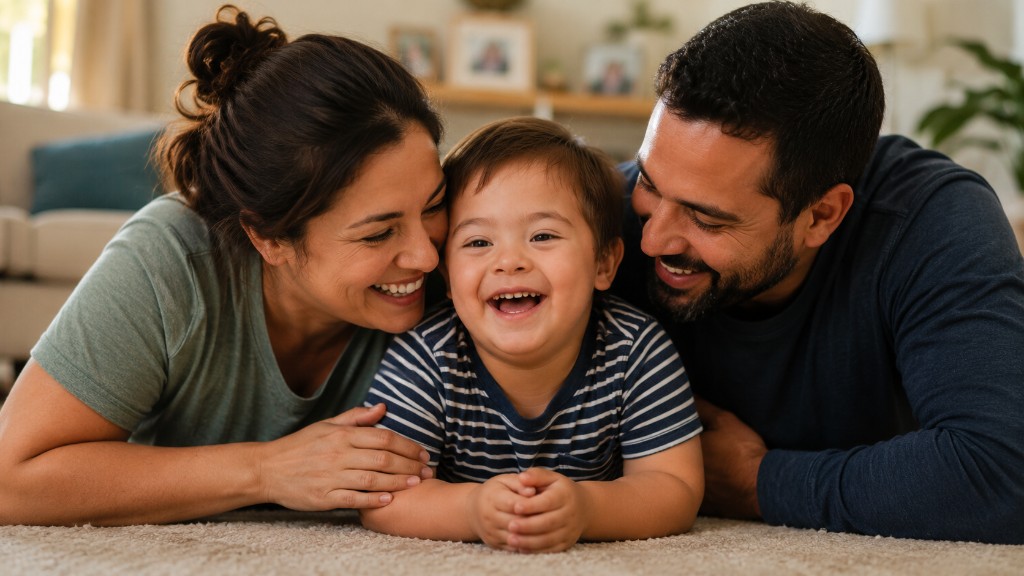
Your child is not defined by a chromosome — they are a whole person with strengths, challenges, and a path that's uniquely theirs. Kinspire builds a complete picture of your family and gives you strategies that work in real life.
WHAT WE SEE
Not in a textbook. Not in a single diagnosis code. In your house, when learning takes longer, communication breaks down, and you're managing development and medical care all at once.
Your child gets there. It just takes longer, and the path looks different. They may need a concept taught ten different ways before it clicks — and then they've got it.
They understand far more than they can express. Watching them get frustrated because their words won't come is one of the harder parts of parenting a child with DS.
Loud environments, certain fabrics, or unexpected touch can trigger big reactions. This isn't behavior; it's sensory processing.
Children with Down syndrome are often described as exceptionally determined. This is the same quality that will serve them well in adulthood. Right now, it makes transitions and non-preferred tasks a daily negotiation.
Your child may be warm, funny, and deeply connected to the people they love, while also struggling with peer relationships, reading social cues in groups, or navigating conflict.
Heart conditions, thyroid issues, hearing and vision impairments — managing the medical piece while also supporting development is a lot. And you're doing it.

“Your child with Down syndrome is not defined by a chromosome. They are a whole person with a unique learning profile — and the right support changes everything.”
THE SCIENCE
Down syndrome (Trisomy 21) is caused by the presence of a third copy of chromosome 21, which affects the development of the brain and body in ways that are consistent but highly variable. No two people with Down syndrome have identical profiles — the extra chromosome creates a range of expression across intellectual ability, communication, motor skills, and health.
From a neurodevelopmental standpoint, Down syndrome affects the hippocampus and cerebellum disproportionately, which influences memory formation (particularly explicit verbal memory), motor coordination, and processing speed. Children with DS often have significant strengths in visual-spatial processing and social cognition while facing more challenges with verbal working memory and sequential processing.
Speech and language development is an area of particular focus — most children with DS have stronger receptive language (understanding) than expressive language (speaking), sometimes by years. AAC strategies can bridge this gap significantly before verbal speech is fully established.
Key research anchors:
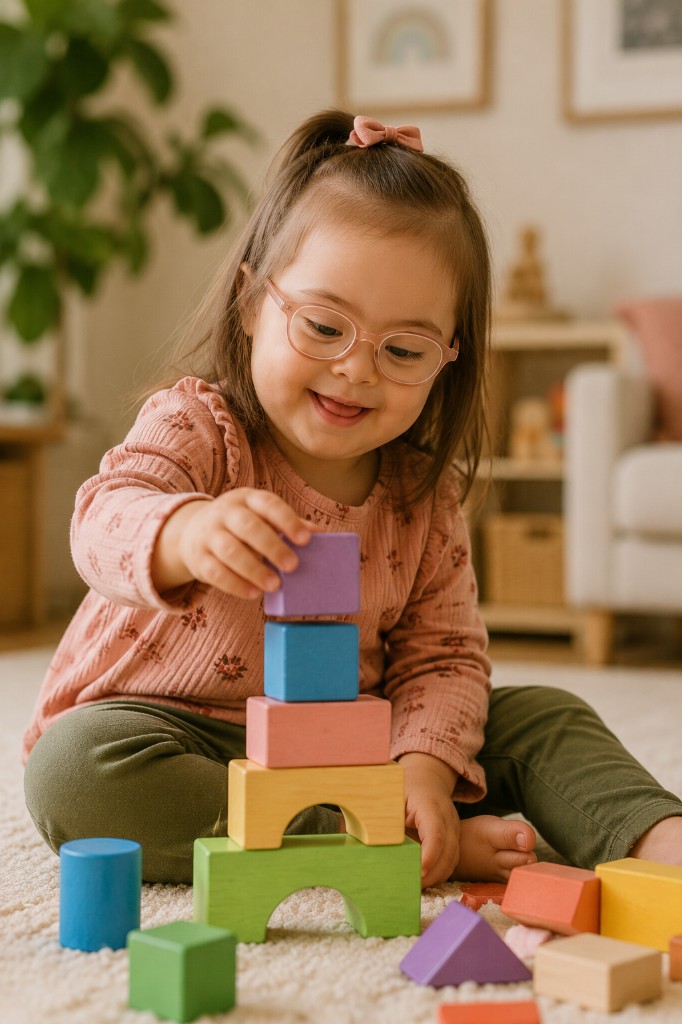
Low muscle tone affects not just gross motor skills but fine motor control, oral motor function, and postural stability — making OT and PT critical in early childhood.
Children with DS often process visual information more efficiently than auditory information, meaning picture-based instruction, visual schedules, and modeling are more effective than verbal-only directions.
Research on inclusive versus segregated educational settings consistently shows better academic and social outcomes for children with DS in inclusive environments with appropriate support.
HOW WE HELP
No two children with Down syndrome are the same. Some need more support with communication; others with motor skills; others with navigating school and peers. We start by understanding yours — then we build from there.
01
We map your child's clinical profile — their learning strengths, communication style, sensory needs, and where daily life is hardest. Then we go deeper into your home: your routines, your rhythms, and the moments that matter most.
02
Every strategy and deep dive is specific to your family's Clinical Knowledge Engine — not generic Down syndrome advice from a checklist. We help you understand what's driving the struggle and what to do about it, in real time.
03
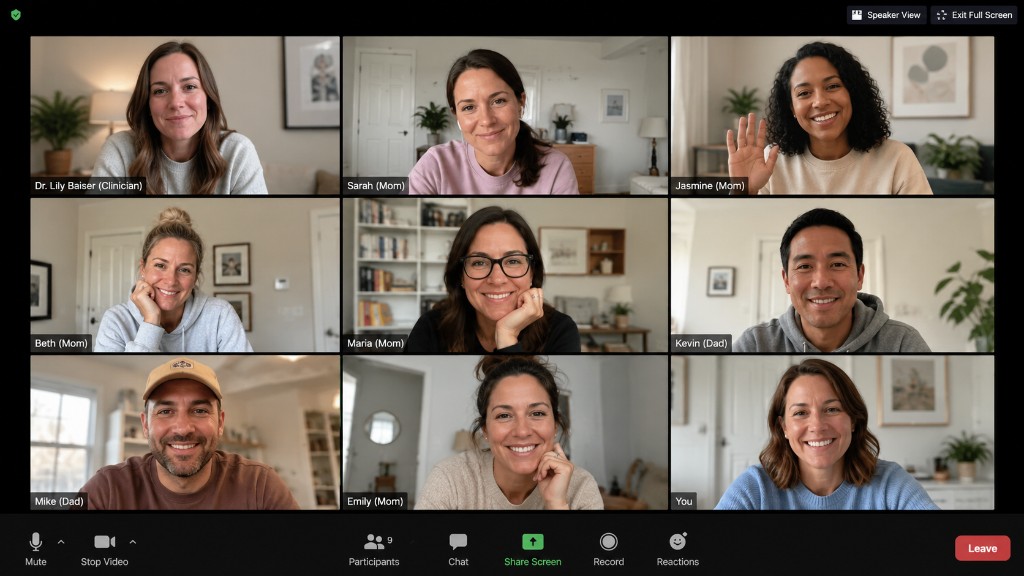
Licensed OTs and neuropsychologists lead sessions designed for Down syndrome families every week. Walk alongside other parents, hear what's working, and leave feeling less alone — and more equipped.
Led by licensed clinicians. Three types of sessions — support groups for community, educational workshops to learn, and open forum office hours — so you always have somewhere to turn.
Support Group
A space to connect with other parents navigating the same questions — communication, school, medical care, independence. Share what's hard, hear what's helping, and walk away feeling less alone. Facilitated by a Kinspire clinician.
Workshop
A practical guide to bridging the gap between what your child understands and what they can express — from sign language to picture boards to speech-generating devices, and why AAC supports rather than delays speech.
Ask Me Anything
Bring your most pressing question — school placement, therapy, communication, medical screening, whatever is hardest right now. No appointment needed.
CLINICAL PERSPECTIVE
Lily and Dr. Jill have worked with hundreds of Down syndrome families. Here's what they want you to know.
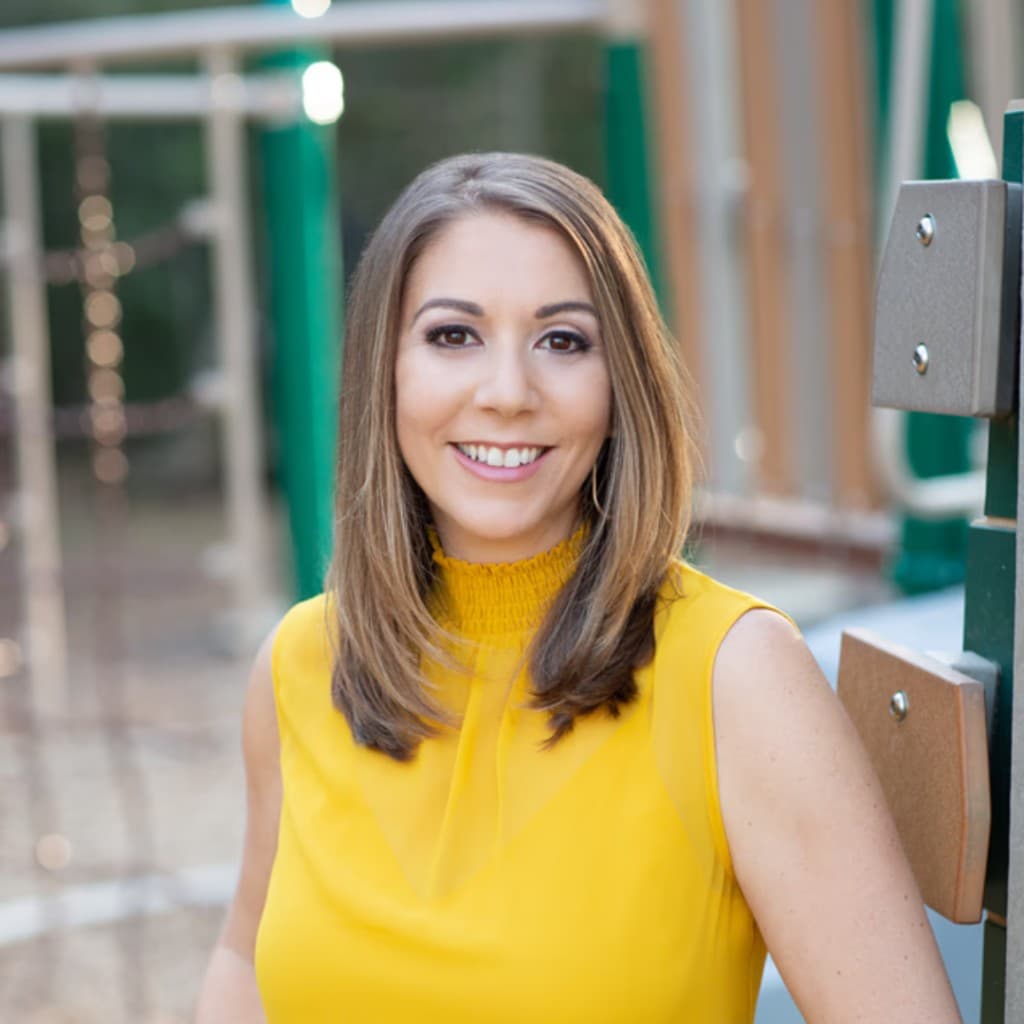
MS, OTR/L · Co-Founder & Clinical Officer
“When I work with a child with Down syndrome, I'm always looking at the gap between what they want to do and what their body is able to do right now — whether that's holding a pencil, fastening a button, or being understood when they speak. We work on closing that gap, and we make it playful enough that the child actually wants to be there. I follow their lead on what motivates them, because the goal was never to make them more typical. It's to help them do more of what they already want to do.”
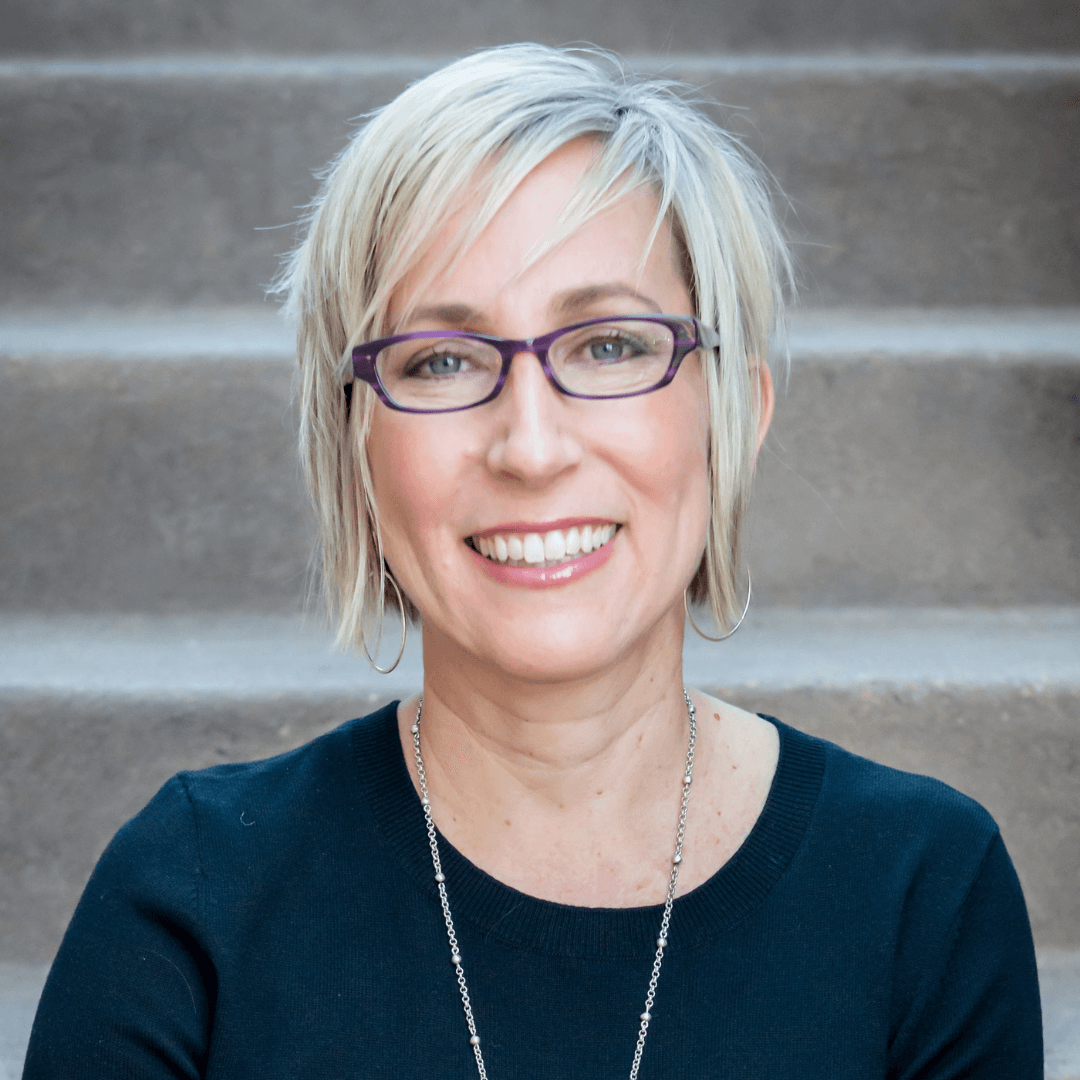
PhD, ABPP-CN · Co-Founder & Neuropsychologist
“The question I get most often from parents of young children with Down syndrome is: 'What will my child's life look like?' And my honest answer is: more than you've been told to expect. The research on outcomes has shifted dramatically. With appropriate support, many adults with Down syndrome live semi-independently, hold jobs, maintain meaningful relationships. IQ scores from early childhood are poor predictors of adult outcomes. What predicts outcomes? Quality of early intervention, inclusive education, and the expectations the adults in their lives hold for them.”
FROM THE KINSPIRE BLOG
Written by our clinical team for parents in the thick of it — not researchers writing for other researchers.
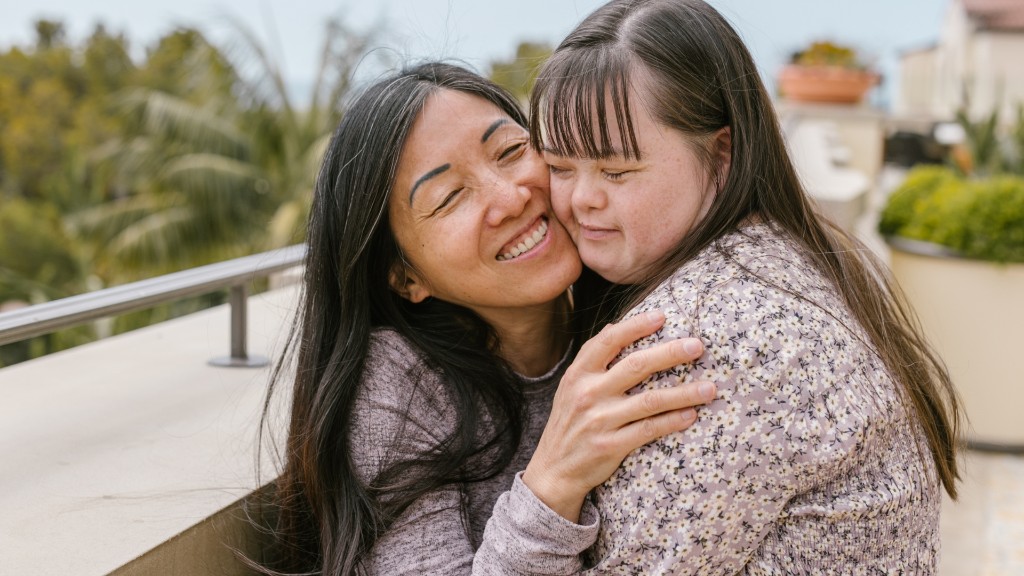
Down Syndrome · Understanding
Down syndrome is not a single experience. What your child's specific cognitive and medical profile means — and why the diagnosis isn't the whole story.
Read more →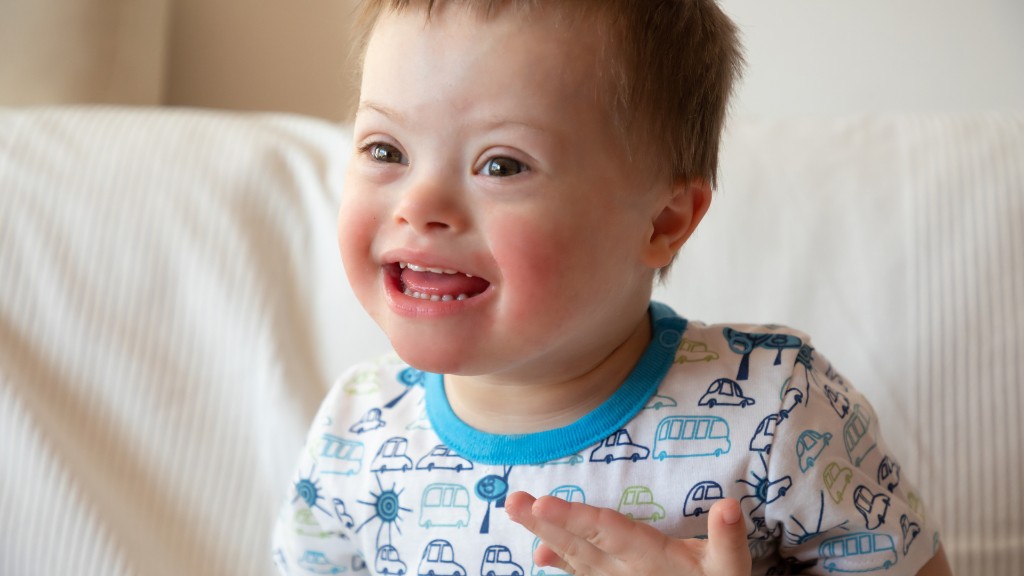
Down Syndrome · Daily Life
Every task you do for your child slows the development of a skill they'll need for life. How to build ADLs in the highest-leverage window.
Read more →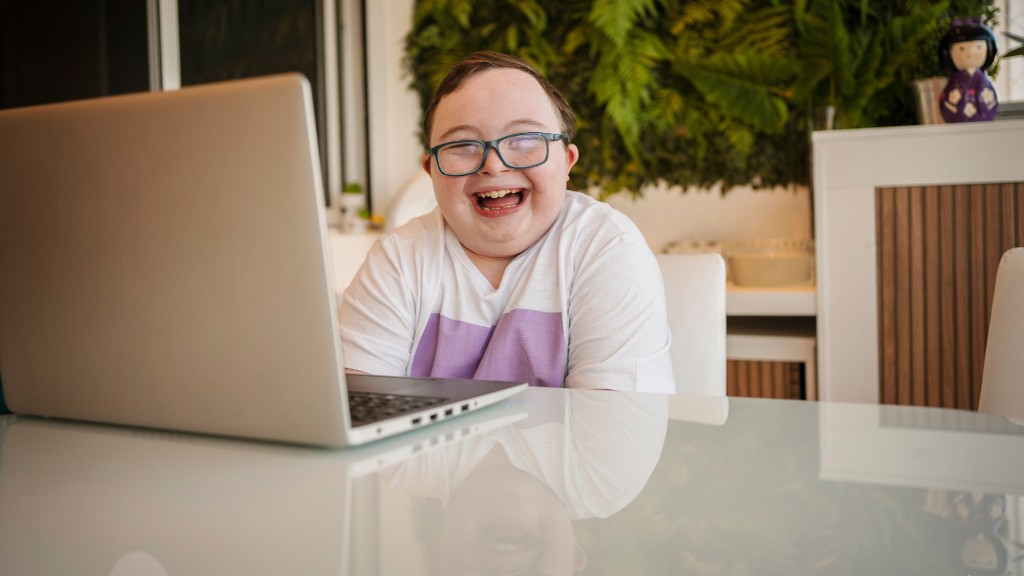
Down Syndrome · Sensory
Sensory processing differences sit at the intersection of neurological difference, motor development, and daily function — and understanding them changes everything.
Read more →COMMON QUESTIONS
Answered by clinicians who've worked with hundreds of Down syndrome families.
Yes. Social strengths are one of the hallmarks of Down syndrome, while academic skills — particularly reading and math — require specialized instruction and more time. This mismatch can be confusing for schools and families. Explicit, structured literacy instruction (similar to what's used for dyslexia) tends to be highly effective for children with DS.
Therapy needs shift as your child develops, but the need for support rarely disappears. Early childhood is typically the highest-intensity period. As children enter school, therapy often transitions to school-based services. The goal is always to build skills that increase independence — and to reassess regularly as your child's needs and goals evolve.
Yes, and it's worth knowing: there's an elevated prevalence of thyroid disorders, hearing loss, vision problems, sleep apnea, and atlantoaxial instability in Down syndrome. Regular screening for these conditions is part of standard care. There is also an increased risk of early-onset Alzheimer's disease in adulthood, which is an active area of research.
Sign language and AAC tools — ranging from picture boards to speech-generating devices — can dramatically reduce frustration and support language development. Research shows that AAC does not delay speech; it supports it. A speech-language pathologist experienced with DS can guide you to the right approach.
FOR YOUR FAMILY
You woke up holding more than you were told you could.
You don't have to end the day the same way.
Start free. No commitment. Built for your child from day one.