Rituals that must be done exactly right
They have to touch the doorknob three times, or say goodnight in a specific order, or redo their backpack until it feels right. Interrupting the ritual causes enormous distress.

WHO WE HELP · OCD
When rituals take over, reassurance never sticks, and leaving the house takes an hour — it's not stubbornness. Kinspire builds a complete picture of your family and gives you strategies that work in real life, alongside ERP and specialist care.

WHAT WE SEE
Not in a clinic. Not on a checklist. In your house, when rituals must be done exactly right, reassurance never lasts, and the thoughts feel too shameful to say out loud.
They have to touch the doorknob three times, or say goodnight in a specific order, or redo their backpack until it feels right. Interrupting the ritual causes enormous distress.
"Are you sure nothing bad will happen?" They ask. You answer. Two minutes later, they ask again. The reassurance provides temporary relief but strengthens the cycle.
Getting dressed, completing homework, or leaving the house takes ten times longer than it should because everything must be checked, redone, or completed in a particular way.
Some children with OCD refuse to touch certain objects, eat certain foods, or visit certain places because of contamination fears that feel completely real to them.
Not all compulsions are visible. Your child may be silently counting, repeating phrases in their head, or mentally reviewing events to neutralize intrusive thoughts.
Intrusive, disturbing thoughts are a hallmark of OCD — and children are often terrified to tell anyone what they're thinking. They are not bad kids for having these thoughts. They are kids with OCD.

“OCD isn't about being clean or organized. It's about a brain that's stuck in a loop it can't exit on its own.”
THE SCIENCE
Obsessive-Compulsive Disorder involves two core features: obsessions (intrusive, unwanted thoughts, images, or urges that cause significant anxiety) and compulsions (repetitive behaviors or mental acts performed to reduce that anxiety). The critical insight is that compulsions work — temporarily. They reduce anxiety in the short term, which reinforces the cycle and makes it stronger over time.
Neurologically, OCD involves dysfunction in the cortico-striato-thalamo-cortical (CSTC) circuit — a loop connecting the frontal cortex, basal ganglia, and thalamus. In OCD, this circuit gets stuck in an "on" position, generating persistent error signals that feel like something is wrong, incomplete, or dangerous even when nothing is. This is sometimes called the "brain hiccup" in patient-facing education.
OCD is not a disorder of character or willpower. Telling a child to "just ignore" their obsessions is neurologically equivalent to telling someone to ignore a smoke alarm. The brain is generating real distress signals, not irrational ones.
The gold-standard treatment is Exposure and Response Prevention (ERP) therapy, a specialized form of CBT. ERP works by systematically exposing the child to feared stimuli while preventing the compulsive response — teaching the brain that anxiety decreases on its own without the ritual. This requires a therapist trained specifically in ERP; general CBT is less effective for OCD.
Key research anchors:

OCD often co-occurs with tic disorders, anxiety, and ADHD — understanding the full profile is important for treatment sequencing.
Participating in rituals, reassuring, or reorganizing the household around OCD maintains and strengthens OCD; this is not blame, it's information that guides family-based treatment.
OCD typically appears in two peaks: childhood (ages 8–12) and late adolescence/early adulthood — earlier identification leads to better outcomes.
HOW WE HELP
No two children with OCD are the same. Some struggle with contamination; others with symmetry, checking, or intrusive thoughts they can't name. We start by understanding yours — then we build from there.
01
We map your child's OCD profile — obsessions, compulsions (visible and mental), triggers, and where the loop shows up hardest in daily life. Then we go deeper into your home: accommodation patterns, reassurance cycles, and the moments that matter most.
02
Every strategy and deep dive is specific to your family's Clinical Knowledge Engine — not generic OCD tips from a checklist. We help you reduce accommodation and support regulation in real time, alongside ERP.
03
Licensed OTs and neuropsychologists lead sessions designed for OCD families every week. Walk alongside other parents, hear what's working, and leave feeling less alone — and more equipped.
Led by licensed clinicians. Three types of sessions — support groups for community, educational workshops to learn, and open forum office hours — so you always have somewhere to turn.
Support Group
A space to connect with other parents navigating rituals, reassurance cycles, and the shame children often carry about intrusive thoughts. Share what's hard, hear what's helping, and walk away feeling less alone. Facilitated by a Kinspire clinician.
Workshop
A practical guide to how the OCD loop works — why reassurance backfires, what family accommodation does, and how to support ERP at home without power struggles.
Ask Me Anything
Bring your most pressing question — finding an ERP therapist, school accommodations, intrusive thoughts, whatever is hardest right now. No appointment needed.



CLINICAL PERSPECTIVE
Lily and Dr. Jill have worked with hundreds of families navigating OCD. Here's what they want you to know.

MS, OTR/L · Co-Founder & Clinical Officer
“OCD often looks like a brain stuck in a loop, with a nervous system working overtime to manage it. That takes real energy — energy pulled away from school, play, sleep, all the things a child needs. My focus is regulation: helping calm an overactive nervous system so the anxiety fueling the loop has less grip. It won't make OCD disappear, but it gives a child more capacity to manage it and get back to the business of being a kid.”
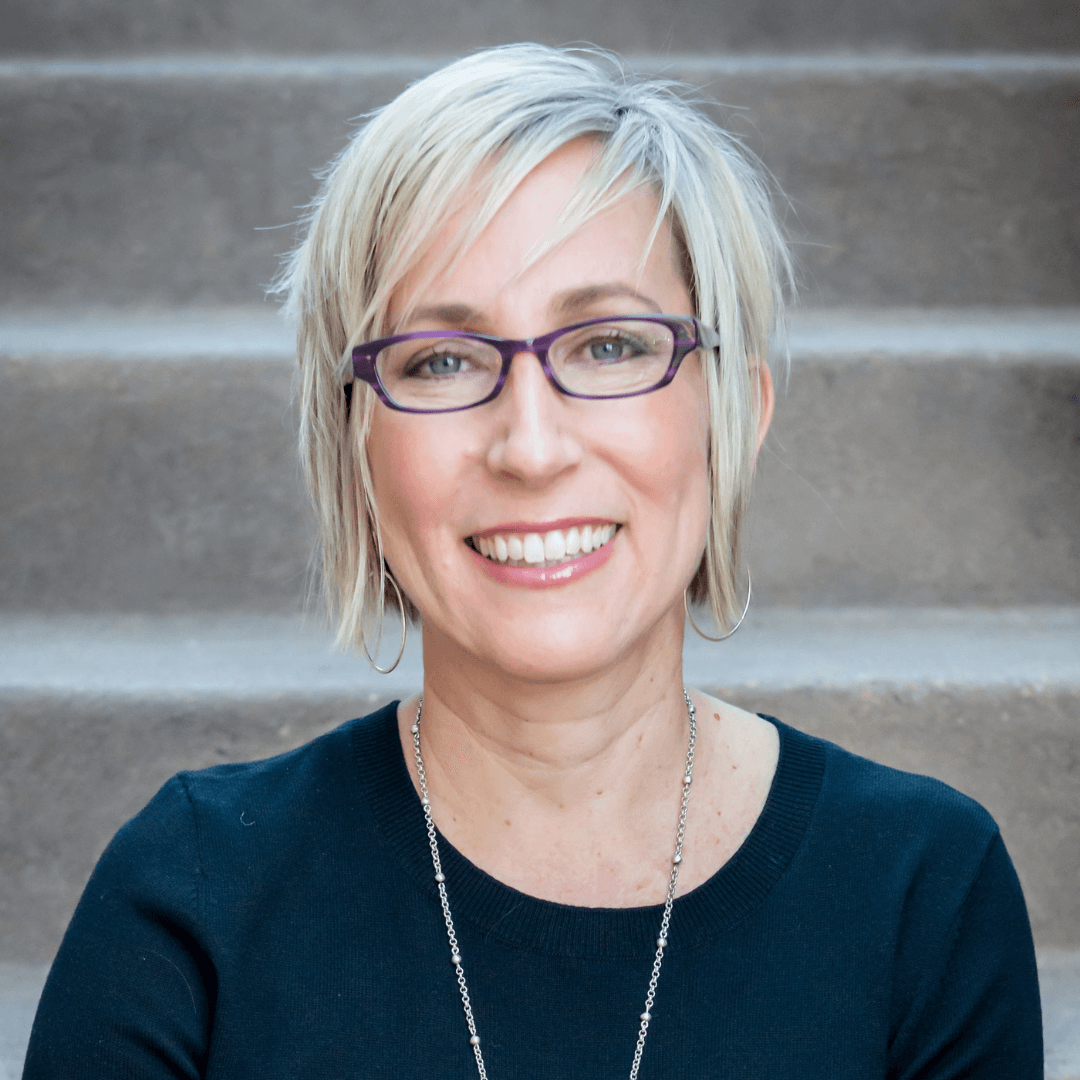
PhD, ABPP-CN · Co-Founder & Neuropsychologist
“I want parents to know: OCD is one of the most treatable conditions in child psychiatry. ERP therapy, done well, produces significant symptom reduction in the majority of children. But it requires a specialist. I regularly see children who've been in general therapy for years with minimal OCD-specific improvement, because their therapist wasn't doing ERP. The first question to ask any potential therapist is: 'What percentage of your practice involves OCD, and do you use ERP?' If they hesitate on either answer, keep looking.”
FROM THE KINSPIRE BLOG
Written by our clinical team for parents in the thick of it — not researchers writing for other researchers.

OCD · Understanding
OCD is not neatness or preference — it's a neurological loop. Obsessions, compulsions, and how childhood OCD looks different than you'd expect.
Read more →
OCD · Understanding
Reassurance feels like kindness but functions like fuel. How the cycle works, family accommodation, and what to do instead.
Read more →
OCD · Treatment
How Exposure and Response Prevention works, what it isn't, finding an ERP-trained clinician, and what treatment looks like over time.
Read more →COMMON QUESTIONS
Answered by clinicians who've worked with hundreds of families navigating OCD.
Yes. OCD is highly idiosyncratic — the content of obsessions and the form of compulsions varies enormously from person to person, and many compulsions are entirely mental (not visible). OCD is defined by the cycle (intrusive thought → anxiety → compulsion → temporary relief → repeat) and the degree of impairment, not by specific content.
Not by force — this typically increases distress without addressing the underlying cycle and can damage your relationship with your child. ERP therapy gradually reduces rituals in a structured way, with the child's agency involved. At home, the goal is to reduce accommodation without escalating into power struggles, and a therapist trained in family-based ERP can guide exactly how to do this.
Intrusive, disturbing thoughts — including thoughts about harm, contamination, or taboo subjects — are a hallmark of OCD, not a sign of dangerous intent. The fact that these thoughts cause profound distress to your child is evidence that they are ego-dystonic (contrary to the child's values and desires). Children with OCD are not at elevated risk of acting on intrusive thoughts.
Occasionally symptoms wax and wane, but OCD is typically a chronic condition that requires treatment. Without ERP, compulsions tend to expand over time as the brain seeks new ways to manage anxiety. With treatment, many children achieve substantial symptom reduction and go on to manage their OCD effectively throughout life.
FOR YOUR FAMILY
You woke up watching another ritual that had to be done exactly right.
You don't have to end the day the same way.
Start free. No commitment. Built for your child from day one.