Bedtime resistance
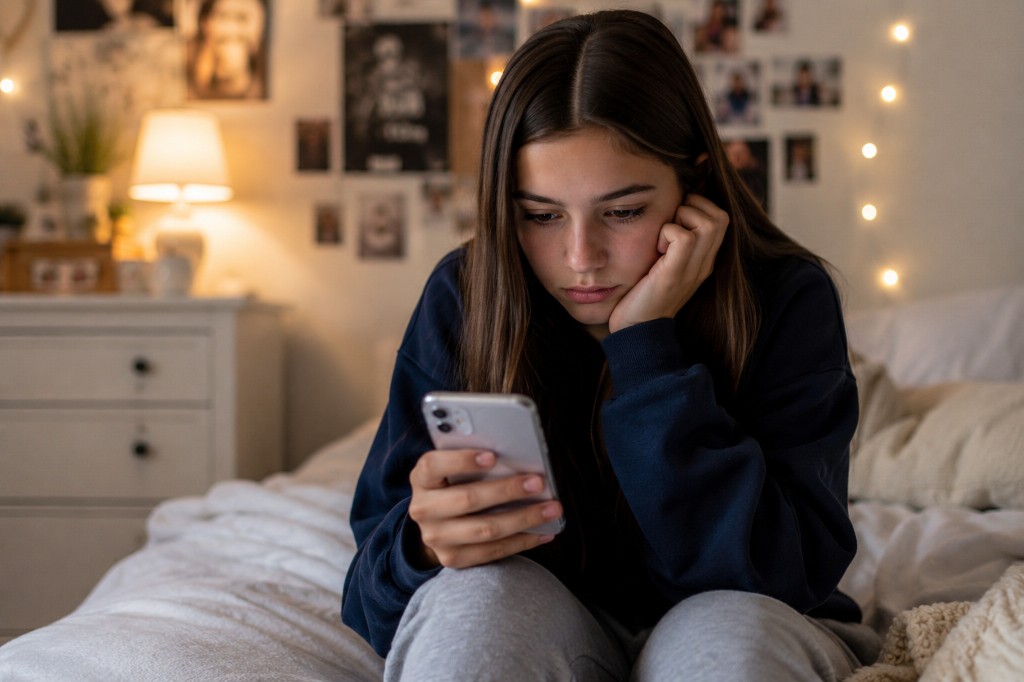
Every night becomes a negotiation. Your child insists something bad will happen if the lights go off, and no amount of reassurance seems to stick.

WHO WE HELP · ANXIETY
Your child isn't being difficult. Their nervous system is working overtime. Kinspire builds a complete picture of your family and gives you strategies that actually work — in your home, in real life.
WHAT WE SEE
Not in a clinic. Not on a checklist. In your house, on a Tuesday, when worry takes over and no amount of reassurance seems to land.
Every night becomes a negotiation. Your child insists something bad will happen if the lights go off, and no amount of reassurance seems to stick.
They ask "what if" questions on repeat: What if I get sick? What if you don't come back? What if I fail? You answer, and thirty seconds later they're asking again.
Monday mornings bring complaints of nausea or stomach pain that mysteriously disappear by noon on a weekend.
The child who used to beg for soccer practice now invents reasons not to go. Social events, birthday parties, and school functions get quietly dropped.
A small change in plans or a minor mistake triggers a complete emotional collapse that seems impossible to interrupt.
They need to hear "it'll be okay" dozens of times a day, and each answer only buys a few minutes of calm.
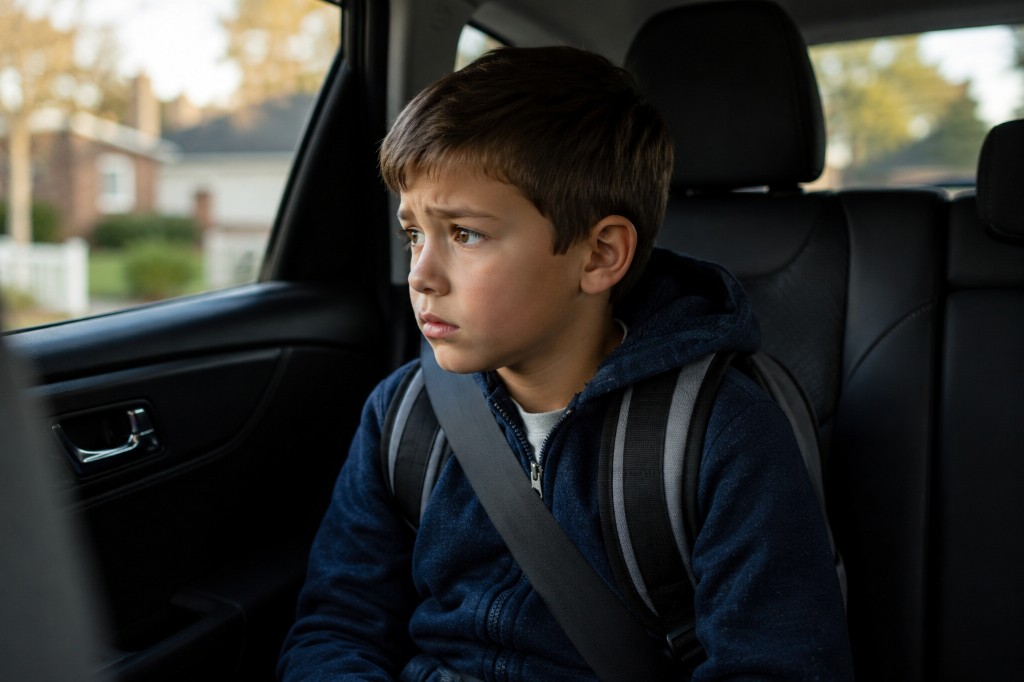
“Your child isn't being dramatic. Their nervous system is sounding an alarm — and they need your help to turn it off.”
THE SCIENCE
Anxiety in children is not a personality flaw or a sign of bad parenting — it's a nervous system that has learned to treat ordinary situations as threats. The amygdala, the brain's alarm center, fires before the thinking brain (prefrontal cortex) can evaluate whether danger is real. In children with anxiety disorders, this alarm fires too easily, too loudly, and too often.
Developmentally, children's brains aren't wired to self-regulate until well into adolescence. When anxiety is also in the picture, the gap between the emotional brain and the rational brain is even wider. This is why logic and reassurance often don't work in the moment — you can't reason with an active alarm.
Anxiety often shows up physically first. The gut-brain connection is real: stress hormones like cortisol and adrenaline trigger genuine gastrointestinal symptoms, muscle tension, and fatigue. Your child is not faking it.
What helps: consistent co-regulation from caregivers, gradual exposure to feared situations (not avoidance), and building a child's sense of self-efficacy over time.
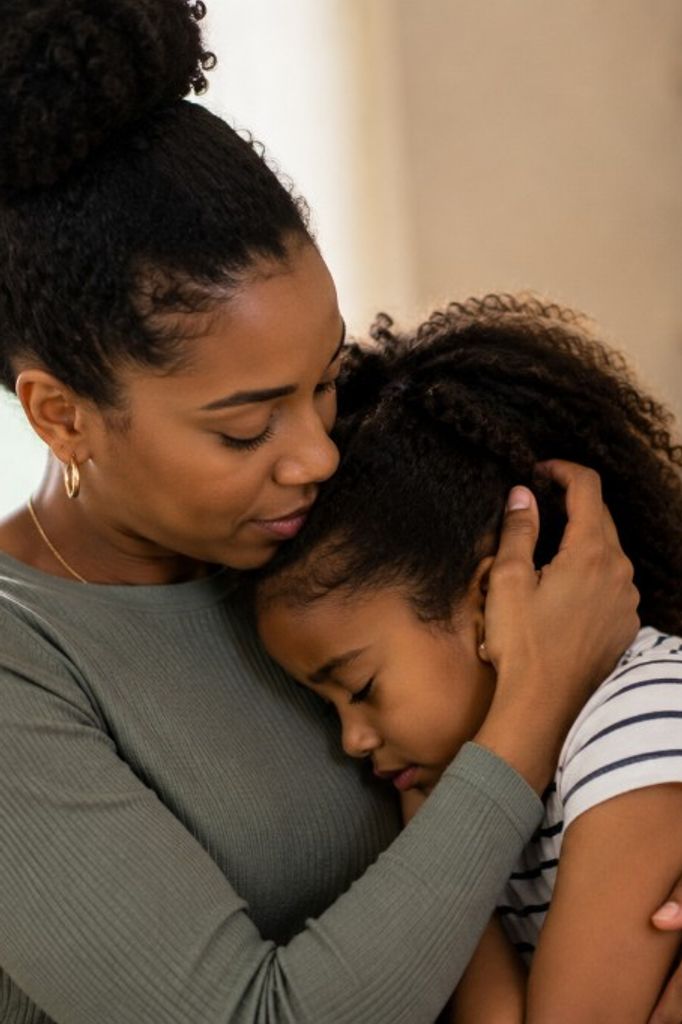
Anxious children have difficulty shifting attention away from threat cues — their brains are scanning for danger even when none exists, making focus on anything else exhausting.
Many children with anxiety have poor interoceptive awareness, meaning they don't recognize their physical anxiety signals until they're already in full alarm mode.
The core skill anxious children need most — and can build — is the ability to sit with "I don't know" without needing to resolve it immediately.
HOW WE HELP
No two anxious children are the same. Some worry about school; others about separation; others about their body. We start by understanding yours — then we build from there.
01
We map your child's clinical profile — how their anxiety presents, what triggers it, where it shows up most. Then we go deeper into your home: your routines, your rhythms, and the moments that are hardest.
02
Every strategy and deep dive is specific to your family's Clinical Knowledge Engine — not generic anxiety advice from a checklist. We help you understand what's driving the behavior and what to do about it, in real time.
03
Licensed OTs and neuropsychologists lead sessions designed for anxiety families every week. Walk alongside other parents, hear what's working, and leave feeling less alone — and more equipped.
Led by licensed clinicians. Three types of sessions — support groups for community, educational workshops to learn and open forum office hours — so you always have somewhere to turn.
Support Group
A space to connect with other parents navigating the same challenges. Share what's hard, hear what's helping, and walk away feeling less alone. Facilitated by a Kinspire clinician.
Workshop
A deep dive into how anxiety works in a child's nervous system — why reassurance backfires, what co-regulation actually does, and the gradual exposure strategies that build real resilience over time.
Ask Me Anything
Bring your most pressing question about your anxious child — bedtime, school refusal, separation, physical symptoms, whatever is hardest right now. No appointment needed.

CLINICAL PERSPECTIVE
Lily and Dr. Jill have worked with hundreds of anxiety families. Here's what they want you to know.

PhD, ABPP-CN · Co-Founder & Neuropsychologist
“Parents often ask me why reassurance doesn't work. Here's the neuropsychology: every time we reassure an anxious child, we're accidentally confirming that the situation was worth worrying about. The brain learns 'danger was real — good thing I got reassurance.' What actually builds resilience is letting the child experience that they can tolerate uncertainty and survive it. That's hard for parents to sit with. But it's the most important shift you can make.”

MS, OTR/L · Co-Founder & Clinical Officer
“Here's the piece most parents miss about stopping their child's anxiety from spiraling: you can't reason with a nervous system that's already flooded. The window for talking, problem-solving, or offering reassurance closes the moment the brain and body shifts into alarm mode. What actually works is catching anxiety earlier—helping your child notice the first physical signs, like a tight chest, racing thoughts, or a knot in their stomach, before the spiral takes hold. That moment of awareness may seem small, but it's the critical window where regulation is still possible. When children learn to recognize those early signals, they have a chance to calm their nervous system before anxiety takes over.”
FROM THE KINSPIRE BLOG
Written by our clinical team for parents in the thick of it — not researchers writing for other researchers.

Anxiety · Understanding
A plain-language guide to what childhood anxiety actually is, how it presents, when to seek help, and what parents can do.
Read more →
Anxiety · Parenting
Why skipping the party, checking locks twice, and rerouting around the dog can make anxiety worse — and what to do instead.
Read more →
Anxiety · Daily life
A practical framework for what actually works before, during, and after anxiety spikes — from Kinspire's clinical OT team.
Read more →COMMON QUESTIONS
Answered by clinicians who've worked with hundreds of anxiety families.
No. Anxiety has strong genetic components — it often runs in families — and is shaped by brain wiring, temperament, and life experience. What parents can do is learn co-regulation strategies and gradually help their child build tolerance for uncertainty. That's not blame; that's partnership.
Short-term avoidance brings relief but makes anxiety worse over time. The brain learns: "I escaped danger — the threat must have been real." The research is clear that gradual, supported exposure to feared situations is what actually reduces anxiety. The key word is gradual — we're not talking about throwing a child in the deep end.
Nighttime removes all the distractions that keep worry at bay during the day. There's no school, no screens, no activity — just a quiet brain and a lot of "what ifs." Establishing a consistent, calm bedtime routine (same time, same sequence, low stimulation) helps signal to the nervous system that it's safe to rest.
Children often can't articulate "I feel anxious" — they show it through behavior: clinginess, irritability, physical complaints, refusal. They also have less executive function to deploy coping strategies, which is why they need adult co-regulation as a scaffold while their own regulatory systems develop.
FOR YOUR FAMILY
You woke up not knowing what to do.
You don't have to end the day the same way.
Start free. No commitment. Built for your child from day one.