Late walking or unstable gait
Your child walked later than expected, or trips and falls more than their peers, or has an unusual gait pattern that's hard to name but noticeable.

WHO WE HELP · GROSS MOTOR DELAYS
When your child's body isn't doing what other kids' bodies do, every playground and PE class can feel unfair. Kinspire builds a complete picture of your family and gives you strategies that work in real life — from stairs and balance to confidence on the move.
WHAT WE SEE
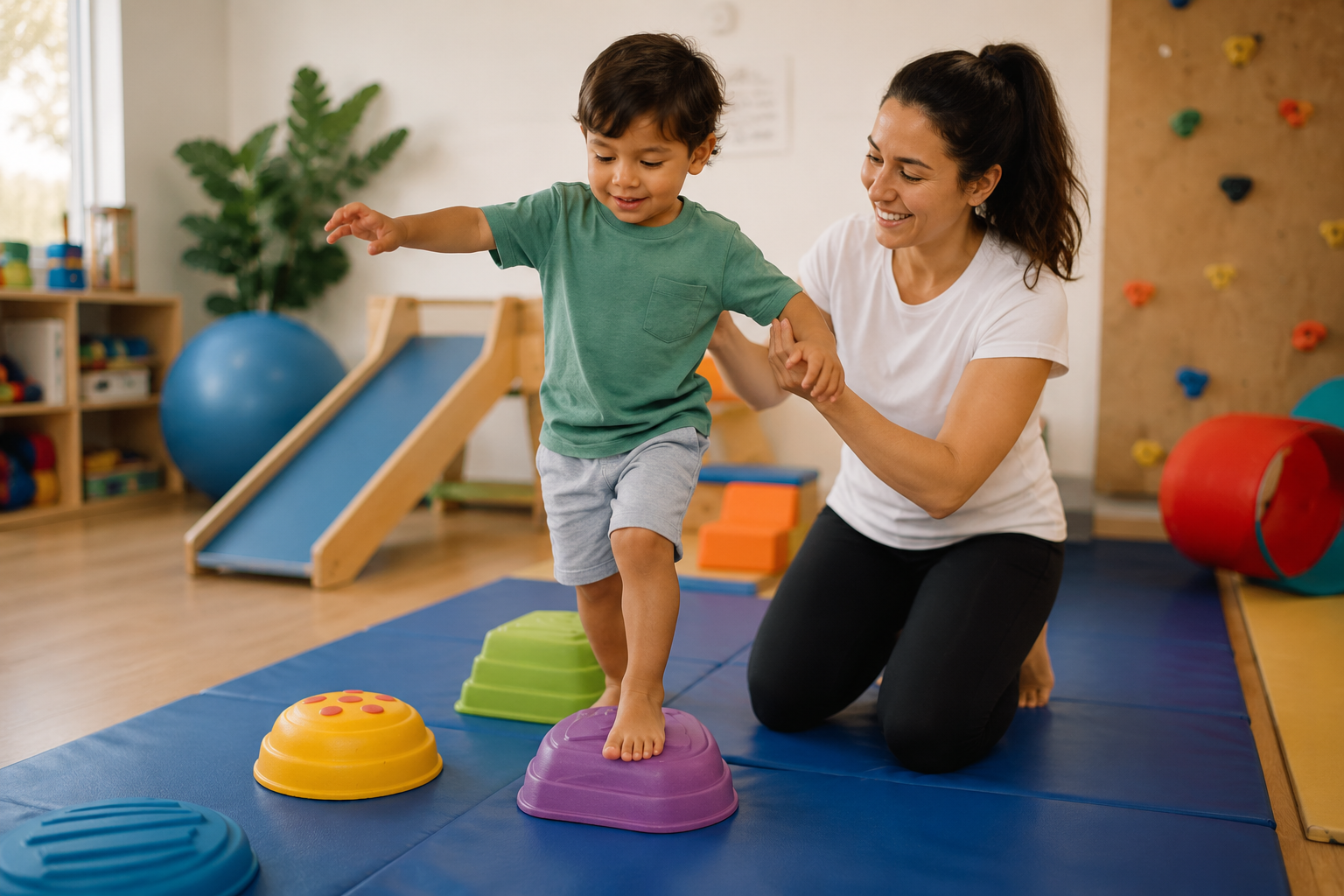
Not on a checklist. Not in a single PT report. In your house, when stairs need a railing, the playground runs out of steam early, and PE starts to feel like something to survive.
Your child walked later than expected, or trips and falls more than their peers, or has an unusual gait pattern that's hard to name but noticeable.
Tasks that other children handle without thought require significant concentration or support. Going up stairs without a railing, jumping on two feet, and running without stumbling are ongoing challenges.
Your child wants to keep up with peers at the playground but runs out of steam quickly. They may sit out activities, avoid physical play, or tire quickly during walks.
Catching and throwing, navigating a crowd on a field, bike riding — the coordination and timing demands of sports are significantly harder for your child.
They bump into things, misjudge distances, knock objects over, and seem unaware of where their body is in space relative to furniture, walls, and other people.
After enough falls, failures, and comparisons, many children with gross motor delays start avoiding the very activities that would help them develop. The avoidance is protective, and it's understandable.
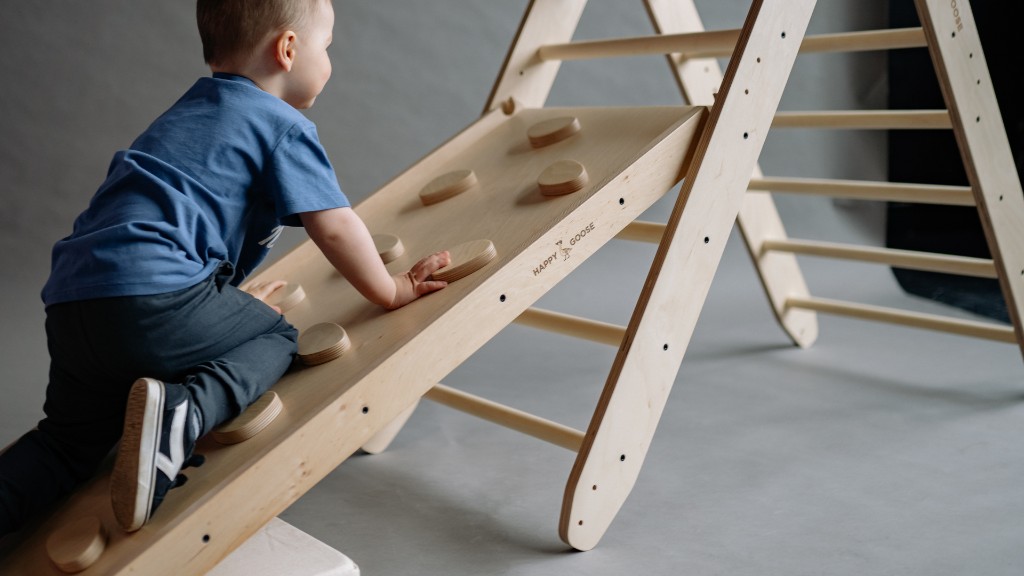
“When your child's body isn't doing what other kids' bodies do, it's not their fault — and it's not yours either.”
THE SCIENCE
Gross motor skills encompass the large-muscle movements that allow a child to move through the world: rolling, sitting, crawling, walking, running, jumping, climbing, throwing, and catching. They develop in a predictable cephalocaudal (head-to-toe) and proximodistal (center-out) progression, building strength and coordination from the core outward.
Gross motor delays can stem from hypotonia (low muscle tone), developmental coordination disorder (dyspraxia), underlying neurological conditions, or simply variability in typical development. They frequently co-occur with fine motor delays, sensory processing differences, and balance impairments.
The vestibular system — the inner-ear system responsible for balance and spatial orientation — plays a central role in gross motor development. Children with vestibular processing differences may be insecure on uneven surfaces, have difficulty with balance activities, or crave intense movement input (spinning, swinging) as a form of self-regulation.
Physical therapy (PT) is the primary specialist for gross motor delays. Occupational therapy often overlaps, particularly around sensory processing, postural control, and participation in daily activities.
Key research anchors:
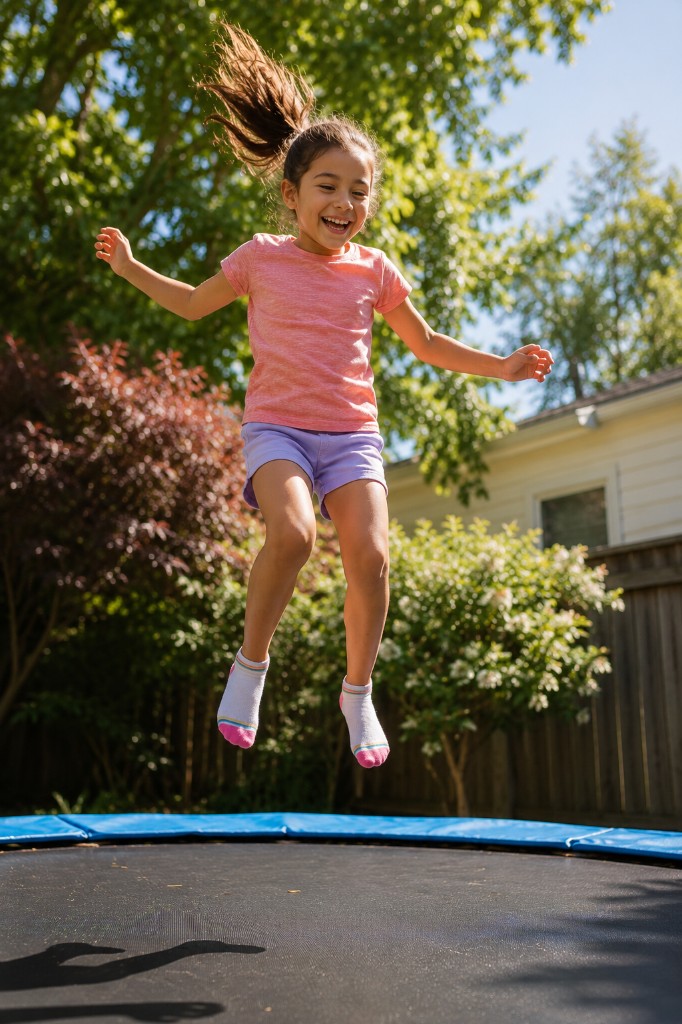
Core stability is the foundation for all gross motor skills — adequate core muscle activation supports posture, balance, and the proximal stability needed for coordinated limb movements.
The ability to plan, sequence, and execute novel motor tasks — children with motor planning difficulties have to work much harder to automate movements other children do effortlessly.
The ultimate measure of gross motor development isn't a test score — it's whether a child can participate in the physical activities of childhood: play, sports, and daily routines. Participation goals should drive therapy planning.
HOW WE HELP
No two children with gross motor delays are the same. Some are cautious and unsteady; others crave intense movement. We start by understanding which nervous system we're looking at — then we build from there.
01
We map your child's motor profile — strength, balance, endurance, vestibular needs, and where movement demands show up hardest in daily life. Then we go deeper into your home: playgrounds, PE, sports, and the moments that matter most.
02
Every strategy and deep dive is specific to your family's Clinical Knowledge Engine — not generic motor tips from a checklist. We help you strengthen the foundations and reduce friction in real time.
03
Licensed OTs, PTs, and neuropsychologists lead sessions designed for gross motor families every week. Walk alongside other parents, hear what's working, and leave feeling less alone — and more equipped.
Led by licensed clinicians. Three types of sessions — support groups for community, educational workshops to learn, and open forum office hours — so you always have somewhere to turn.
Support Group
A space to connect with other parents navigating falls, PE anxiety, and sports that feel harder than they should. Share what's hard, hear what's helping, and walk away feeling less alone. Facilitated by a Kinspire clinician.
Workshop
A practical guide to what gross motor development actually requires — from core stability to vestibular processing — and how to embed practice into play and daily routines without battles.
Ask Me Anything
Bring your most pressing question — PT referrals, PE accommodations, bike riding, endurance, whatever is hardest right now. No appointment needed.



CLINICAL PERSPECTIVE
Lily and Dr. Jill have worked with hundreds of families navigating gross motor delays. Here's what they want you to know.

MS, OTR/L · Co-Founder & Clinical Officer
“Gross motor delays don't all come from the same place. Some kids are cautious and unsteady — climbing stairs or riding a bike feels genuinely unsafe to their body. Other kids are the opposite: they crave spinning, crashing, jumping, and can't get enough movement. Those are two different nervous systems, and they need two different approaches. The first step is always understanding which one I'm looking at — because one approach will not fit every body.”

PhD, ABPP-CN · Co-Founder & Neuropsychologist
“Motor development and cognitive development are more connected than most people realize. The cerebellum — our primary motor coordination center — also plays significant roles in language, attention, and executive function. This is why children with significant motor delays sometimes also show differences in cognitive processing speed or attention. A comprehensive evaluation helps identify the full picture, so therapy addresses all the connected pieces.”
FROM THE KINSPIRE BLOG
Written by our clinical team for parents in the thick of it — not researchers writing for other researchers.

Gross Motor · Understanding
Movement isn't just about sports. What gross motor skills are, how delays show up, causes, and when to seek an evaluation.
Read more →
Gross Motor · Understanding
DCD affects 5–6% of children — more common than autism — yet is dramatically underrecognized. What it is, how it's diagnosed, and what helps.
Read more →
Gross Motor · At Home
The most powerful intervention isn't always a clinic — it's play. Core strength, balance, jumping, ball skills, and playground scaffolding.
Read more →COMMON QUESTIONS
Answered by clinicians who've worked with hundreds of families navigating gross motor delays.
Some motor variations do resolve on their own, and pediatricians appropriately avoid over-pathologizing typical development. However, if your instincts say something is more than a typical delay, or if you're noticing the gap between your child and peers growing rather than closing, requesting a physical therapy evaluation carries very little risk and potentially significant benefit. You can always ask for a referral while also waiting.
Not necessarily — occasional clumsiness is entirely typical. DCD is diagnosed when motor coordination difficulties significantly impact daily activities and academic performance, can't be better explained by another condition, and have been present since early development. A PT or pediatric neurologist can help distinguish typical clumsiness from DCD.
Avoidance of physical activity in children with gross motor delays is common and self-protective — they've had more experiences of failure and comparison than their peers. Focusing on non-competitive physical activities (swimming, gymnastics, martial arts, bike riding) that build strength and coordination without direct peer comparison can rebuild confidence. Work with PT on specific skills that enable participation in activities your child values.
Yes, in several ways. Motor and language development share neural substrates, and motor delays sometimes co-occur with speech delays. Body-based confidence and self-efficacy affect social participation. And the physical fatigue of working harder to navigate a body that doesn't cooperate can affect attention and emotional regulation. Addressing gross motor delays is rarely just about movement.
FOR YOUR FAMILY
You woke up watching them sit out another game they wanted to join.
You don't have to end the day the same way.
Start free. No commitment. Built for your child from day one.