
Supporting Language Development at Home: Evidence-Based Strategies

Lily Baiser
MS, OTR/L · Chief Clinical Officer, Kinspire · Licensed pediatric occupational therapist and Kinspire co-founder · Full bio →
· 8 min read
If there's one thing the language development research says loudly and clearly, it's this: what happens between a child and their caregivers in the everyday moments of their shared life is the single most powerful driver of language learning. Not flashcards. Not apps. Not specialized programs. The back-and-forth of real human conversation, responsive to your child's interests and communication attempts, embedded in the real stuff of daily life. This is genuinely good news for parents. It means you already have everything you need.
Rich language input during the early years is not a program you enroll your child in. It is the quality of attention you bring to the hours you already have.
The Foundation: Responsive Interaction
Responsive interaction means noticing what your child is attending to, interested in, or communicating (even non-verbally) and responding to it. It means treating every sound, gesture, look, and action as a communication and responding as if it is one. It means following your child's lead rather than redirecting their attention to what you want them to learn.
This runs counter to how many of us are taught to "teach." Responsive interaction doesn't look like drilling vocabulary words. It looks like noticing that your child is staring at the dog, and saying "the dog is sleeping. She's on her bed." It looks like waiting when your child reaches toward something instead of immediately handing it over. It looks like imitating your child's babbles and waiting to see what they do next.
Decades of research consistently show that responsive, contingent interaction — where the caregiver follows the child's attention and responds to their communication — is more strongly associated with language outcomes than any other measurable environmental factor.
Strategy 1: Talk More (and Differently)
Ways to talk
- →Self-talk and parallel talk: Self-talk means narrating your own actions aloud ("I'm washing the dishes. Hot water. Now I'm scrubbing the pan."). Parallel talk means narrating your child's actions ("You're putting the blocks in the bin. One at a time. Now you're shaking it!"). Both flood the environment with language that's meaningful because it's attached to real, happening-right-now experiences.
- →Expansion: When your child says something, repeat it back with slightly more complexity. Child says "ball." You say "yes, that's a big red ball." Child says "doggy run." You say "the dog is running fast!" You're not correcting — you're modeling the next level of language development just above where they are.
- →Varied vocabulary: Instead of just "dog," say "golden retriever," "fluffy dog," "our neighbor's dog." Instead of "big," say "enormous," "giant," "huge." Children whose caregivers use richer, more varied vocabulary develop larger vocabularies themselves.
- →Questions that open conversation: Questions with a real conversational answer ("what do you think will happen next?") develop more language than test questions with only one right answer ("what color is that?").
The 3 Ts from the Thirty Million Words Project
Tune In (pay attention to what your child is interested in), Talk More (use lots of language about that thing), and Take Turns (make conversation two-way). These three practices, done consistently during everyday routines, produce measurable gains in language development.
Strategy 2: Read Together Every Day
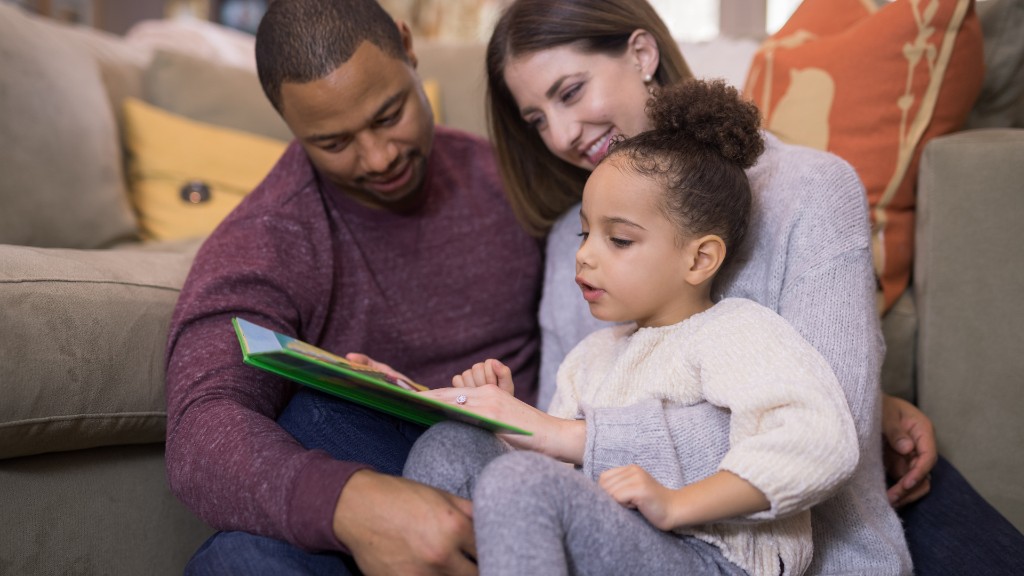
Shared book reading combines rich vocabulary exposure, narrative structure, picture-pointing, question-asking, and turn-taking all at once. Dialogic reading — a specific approach the research shows is significantly more effective than traditional reading — means:
Dialogic reading
- →Asking open-ended questions about the pictures and story
- →Letting your child take the lead — if they point at something, talk about that
- →Expanding and adding when your child names something
- →Connecting the book to real life
- →Reading the same books repeatedly — children learn more language from repeated readings than from always reading new ones
For very young children or children with significant delays, start with books that have very simple text and clear pictures. Don't worry about reading every word — use the pictures as conversation starters.
Strategy 3: Create Communicative Opportunities
One of the most evidence-supported approaches in speech-language intervention is creating "communicative temptations" — situations that naturally motivate a child to communicate. If everything your child needs is immediately and easily available, they have little need to communicate.
Communicative temptations
- →Sabotage routines: Put your child's cup on the table without filling it. Give them a bowl with no spoon. Leave one shoe off. Wait. When they respond — even with a look, a reach, or a sound — respond to that communication and narrate it.
- →Offer choices: Hold up two options and wait.
- →Pause in familiar routines: In songs or games your child knows well ("ready, set..."), pause before the expected word and wait.
- →Put things in sight but out of reach: Wait for them to communicate before you hand it over.
None of this should create frustration. You're making communication just necessary enough to motivate — not so hard that it becomes aversive.
Strategy 4: Limit and Use Screen Time Wisely
Passive screen time does not support language development in children under 2, and has limited benefits in children 2–5 compared to live interaction. Several studies find that screen time displaces the interactive, conversational time that actually builds language.
For children with language delays, reducing passive screen time and replacing it with interactive play and conversation is generally worthwhile. Co-viewing — watching with your child and commenting on what you see, asking questions, connecting content to real life — transforms passive consumption into an interactive language experience.
Strategy 5: Sing and Play With Language
Songs, rhymes, and word play develop phonological awareness — the ability to notice and work with the sound structure of language — which is a critical precursor to reading. Singing the same songs repeatedly, finishing familiar rhymes together ("Twinkle twinkle little..." — pause), playing with word sounds, and noticing rhymes in books all build this foundation in a way that's entirely natural and genuinely enjoyable.
For children who are not yet talking, songs and rhymes are also excellent because the musical structure and repetition make language more predictable and therefore more accessible.
Building It Into Your Day
None of these strategies require extra time. They require a shift in attention during time you're already spending:
Everyday moments
- →Morning routine: Narrate dressing, name body parts, talk about what you're doing and why.
- →Mealtime: Comment on food, ask about the day, describe what you see. Turn off the TV.
- →Car rides: Talk about what you see outside. Play "I spy." Listen to children's music and sing together.
- →Bath time: Narrate, play, sing. Bath toys create natural commenting and questioning opportunities.
- →Bedtime: Read together. Review the day. Ask about tomorrow.
Fifteen focused, conversation-rich minutes during each of these daily routines adds up to significant language input without adding a single extra activity to your day.
How Kinspire Helps
See the language opportunities you already have
Kinspire coaches specialize in helping parents see the language opportunities in their existing day and use them with intention. They watch you interact with your child (via video or live session) and give specific, personalized feedback: "Try pausing here and waiting." "Notice that when you expand his word, he tries to say the longer version — that's working." For children working with a speech-language pathologist, Kinspire helps you bridge the gap between what the SLP is working on in sessions and what you're doing the rest of the week. That bridge is where real language development happens.
Personalized Feedback
Get specific coaching on your interactions — not generic language tips.
Bridge to SLP Work
Carry session goals into daily routines where language actually grows.
Built Into Your Day
Use morning, meals, bath, and bedtime — not another scheduled activity.
Start for free. Grow from there.
Your Kinspire journey starts the moment you join — no waitlist, no referral needed.
- 1
Complete Our Initial Consultation
Not a questionnaire — a conversation. Dawn learns about your child's body, mind, and nervous system from the very first session.
- 2
Get Resources Built for Your Family
Receive step-by-step guidance, deep dives, and insights made specifically for your family's situation.
- 3
Access Live Sessions with Clinicians
Join live group sessions and get answers from Kinspire's OT and neuropsychology team — clinicians who can see the whole picture.
Questions Parents Are Actually Asking
My child is in speech therapy once a week. Is that enough to make a difference?+
Once-weekly therapy can absolutely produce gains, particularly when it's high quality and when parents are actively carrying over strategies at home. Research on SLP intervention consistently shows that parent involvement — learning what the SLP is doing and doing it more often at home — produces better outcomes than therapy alone. Think of once-weekly sessions as the training ground; home is where the real practice happens.
My mother-in-law says I talk to my child too much and I'm preventing them from speaking. Is that true?+
No. This is a common misconception not supported by any research on language development. Talking with your child — responsively, following their lead — does not prevent them from talking. It does the opposite. The one nuance worth noting is that directing speech ("say ball," "tell me what this is") is less effective than conversational, responsive speech.
Are baby sign language programs helpful for children with language delays?+
Yes, with an important caveat. For children with expressive language delays who have intact comprehension and social development, teaching signs for key words can reduce frustration and support communication while spoken language develops. Research consistently shows that using signs does not delay spoken language development — and often supports it. However, signing is not a substitute for spoken language intervention, and a child with significant language delay should be receiving SLP services in addition to any signing program.